

Priority & Waiting List Management Software for Developmental Services and Community Living Providers
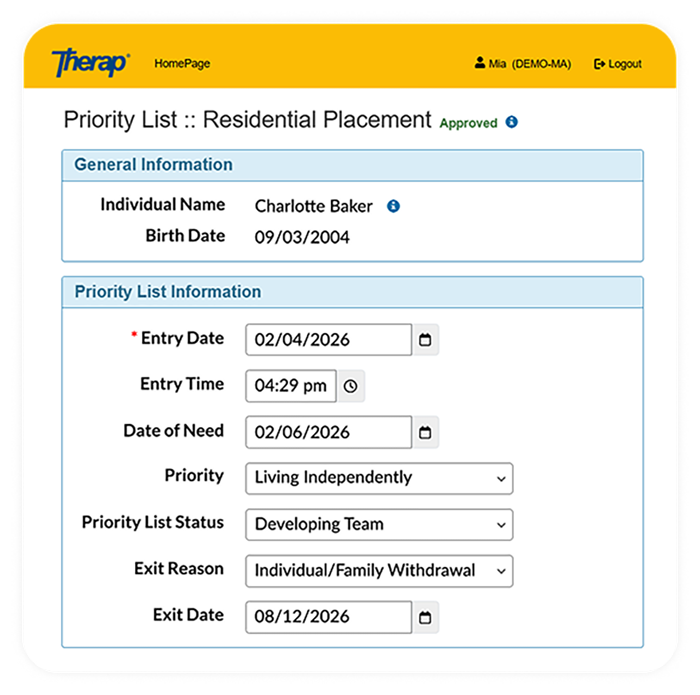
Therap's Priority & Waiting List Management Software centralizes each applicant's intake status, replacing scattered spreadsheets and physical folders with one secure, shared view your whole team can rely on. Connecting individuals with community living, day programs, and supported residential services requires clear tracking from the very first contact. Therap provides intake specialists, service coordinators, and administrative leaders with a unified platform to see exactly who needs supports next and transition individuals seamlessly into care.
Functionality

Manage Multiple Service Lists
Categorize waitlists by specific programs (e.g., residential, day supports, respite, supported employment), eligibility criteria, provincial funding streams, or regional branches.

Log Applicant Communications
Document timestamped contact notes, phone calls, family meetings, and community partner consultations in a single central location.

Assign Priority Levels
Set configurable priority ratings based on assessed individual need, referral date, regional access agency recommendations, or support urgency.

Attach Intake Assessments
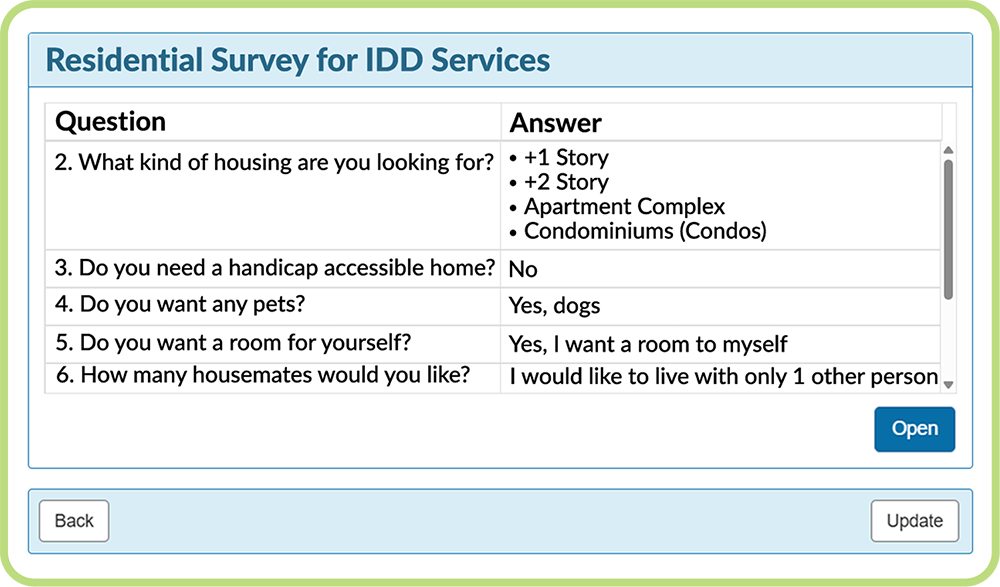
Link intake questionnaires, eligibility evaluations, medical assessments, and consent forms directly to applicant profiles.

Track Service Transitions
Manage incoming community referrals, active individuals seeking additional or specialized programs, and former participants looking to re‑enter services.

Generate Reports
Review waitlist metrics and demographic data to evaluate program capacity, submit ministry reports, and forecast future community demand.
Benefits

Reduce Administrative Confusion
Replace scattered paper files and uncoordinated spreadsheets with a shared digital workspace for intake staff, service coordinators, and program managers.
Improve Placement Timelines
Quickly identify individuals with urgent support needs so coordinators can fill residential vacancies and program openings without delay.
Maintain Clear, Comprehensive Records
Store complete historical records—including intake documents, questionnaires, and communication logs—supporting team handoffs and compliance with provincial quality standards.

Frequently Asked Questions
What is the Therap Priority List module?


It is a secure, cloud‑based tool designed to help developmental services providers, community living agencies, and intake coordinators track applicants, manage program waitlists, and document all interactions with individuals seeking services.
Who can access and update Priority Lists in Therap?
Access is governed by customizable, role‑based user privileges. Authorized administrators, intake specialists, and program supervisors can view, update, and manage lists according to their assigned permissions, safeguarding applicant privacy in compliance with PIPEDA and provincial health information regulations.
Can intake questionnaires and forms be attached to waitlist profiles?
Yes. Configurable questionnaires, provincial intake documentation, and supporting eligibility files can be uploaded directly to an applicant's Priority List record to maintain a comprehensive intake file.
Can our agency maintain separate lists for different programs?
Yes. Agencies can configure multiple priority lists based on program types (e.g., Supported Independent Living, group living, day options), provincial funding streams (such as Passport, FSCD, or ministry base allocations), or regional delivery zones.
How does the system record interactions with applicants?
Staff can log detailed contact notes for phone calls, intake meetings, virtual consultations, and communications with applicants, family members, advocates, or regional ministry/access partners (such as Developmental Services Ontario or Community Living BC) directly on the individual's profile.
How does the module support long‑term agency planning?
Built‑in reporting tools allow leadership to evaluate overall waitlist volume, track service demand trends across programs, and analyze capacity utilization to inform staffing models, operational budgets, and provincial funding proposals.